
Yarn for Crochet Explained (What You Actually Need as a Beginner)
Updated: May 12
In this blog post, let’s take a look at yarn.
There are so many different colours, fibres, thicknesses and labels — and for beginners, it can quickly feel overwhelming to choose the right one.
But the truth is, you don’t need to understand everything.
Let’s keep it simple and focus on what actually matters to get you started.
Prefer to watch watch instead? I break it down here:
What Yarn Weight Means
In crochet, yarn weight does not mean how heavy the yarn is. It means how thick the yarn strand is.
Some yarns are very thin, while others are thick and chunky and this directly affects how your stitches look and how your project turns out.
You might see different yarn weights under these names: lace (very thin), fingering, sport, DK, worsted (medium), bulky, and super bulky.
Each yarn weight usually comes with a recommended hook size, so the two are closely connected. If you want to understand hook sizes a bit more, you can read my full guide here:👉 (link to your hook sizes blog post)
What matters most is this:
Different yarn thickness = different results
The same stitch will look completely different depending on the yarn you use.

Yarn Fibres
Now that you know what yarn weight means, let’s take a look at fibres.
Yarn fibres affect how the yarn feels and how it behaves when you crochet.
Here are the most common ones:
Acrylic
Soft and smooth to work with (slides easily on the hook)
Affordable and easy to find
A great choice for beginners
Cotton
Less stretchy
Holds its shape well
Great for things like dishcloths, hot pads, or home décor
Cotton can feel a bit harder to work with at the beginning and may split sometimes because it’s less flexible.
Wool
Warm and slightly stretchy
Great for garments and winter projects
You might also come across other fibres like bamboo, linen, or alpaca, as well as blended yarns (a mix of different fibres), which are very common.
What Yarn Should a Beginner Use?
If you’re just starting, the easiest way to choose yarn is to keep it simple.
Go for worsted weight (medium #4) yarn paired with a 5 mm or 6 mm hook.
This is the most commonly used combination for beginner projects and tutorials and for a reason. Your stitches will be clearly visible, and the yarn is much easier to hold and control while you’re learning.
The best option to start with is acrylic yarn. It’s inexpensive, easy to find, and slides smoothly on the hook, which makes crocheting feel much easier in the beginning.
Also, choose a solid colour yarn. Avoid black or very dark colours, as well as multicolour yarns. They can make it harder to see your stitches, which makes learning more frustrating than it needs to be.
Start here, take your time, build your confidence, and then explore more as you go.

How to Read a Yarn Label
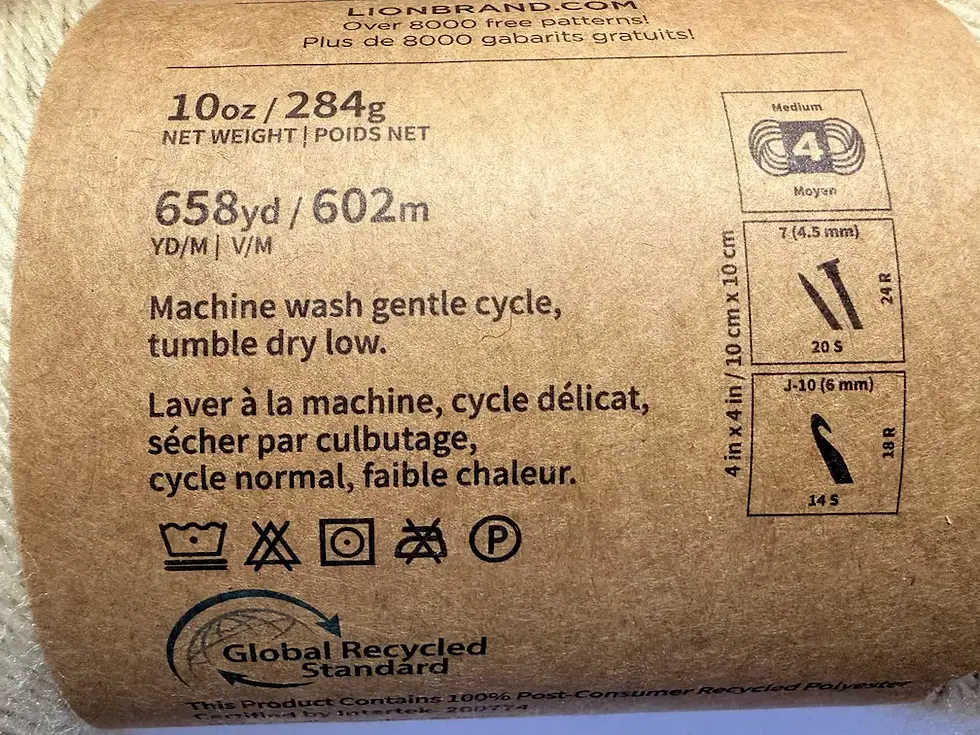
Every yarn comes with a label that tells you what you need for your project.
Let’s break it down so you know what to look for:
Yarn Weight
This tells you how thick the yarn is. Look for #4 (worsted / medium) if you’re following the beginner recommendation.
Hook Size
There’s no strict rule for which hook size to use, but the label suggests a size that works well with that yarn. It’s the best place to start.
Fibre Content
This tells you what the yarn is made of (acrylic, cotton, blends). It helps you choose the right yarn for your project.
Yardage
This tells you how much yarn is in the skein. Important when you start following patterns.
Tip:
If you’re working from a pattern, try to buy all the yarn you need at once. Yarn comes in different dye lots, and if you buy another skein later, the shade might be slightly different (speaking from experience).
You might also see gauge information and care symbols. We’ll talk about gauge in the next post.
Want Everything in One Place?
If you don’t want to keep second-guessing things like yarn, hook sizes, and where to actually start, I created a Crochet Starter Kit for Beginners as a clear starting point.
It brings everything together so it actually makes sense, not just pieces from different tutorials.
Inside, you’ll find:
The basics explained in a simple way (so you can come back to it anytime)
A clear understanding of yarn, hooks, and how they connect
Step-by-step guidance for the basic stitches
How to read crochet patterns
Two beginner-friendly patterns to practice
You’ll also get a printable cheat sheet that sums up the most important things like hook sizes, yarn weights, and basic crochet terms — something you can quickly refer to while you crochet.
It’s all designed to help you start with clarity, not confusion.
You can check it out here:


Comments